Why "3 Stocks to Buy Now" Headlines Miss the Point
Every few weeks, a new list of "unstoppable dividend stocks" circulates across financial media, and every few weeks, investors buy in without asking the one question that matters: will this dividend still be here in five years? If you're searching for the best passive income stocks, the ticker symbols matter far less than the method you use to vet them. Markets shift, interest rates move, and today's darling can become tomorrow's dividend cut — but a solid evaluation framework works in any environment.
This guide skips the "buy these three now" format entirely. Instead, you'll walk away with the exact criteria professional dividend investors use — yield sustainability, payout ratio discipline, dividend growth history, and balance sheet strength — so you can vet any stock, in any market, for years to come.
What Makes a Stock Actually Good for Passive Income
Passive income investing has a specific psychological trap: the higher the yield, the more tempting the stock looks, and the more likely it is to be a trap. A 9% yield often signals the market expects a dividend cut, not a windfall. The best passive income stocks tend to sit in a much less exciting range — typically 2% to 5% — because sustainability, not headline yield, is what compounds wealth over decades.
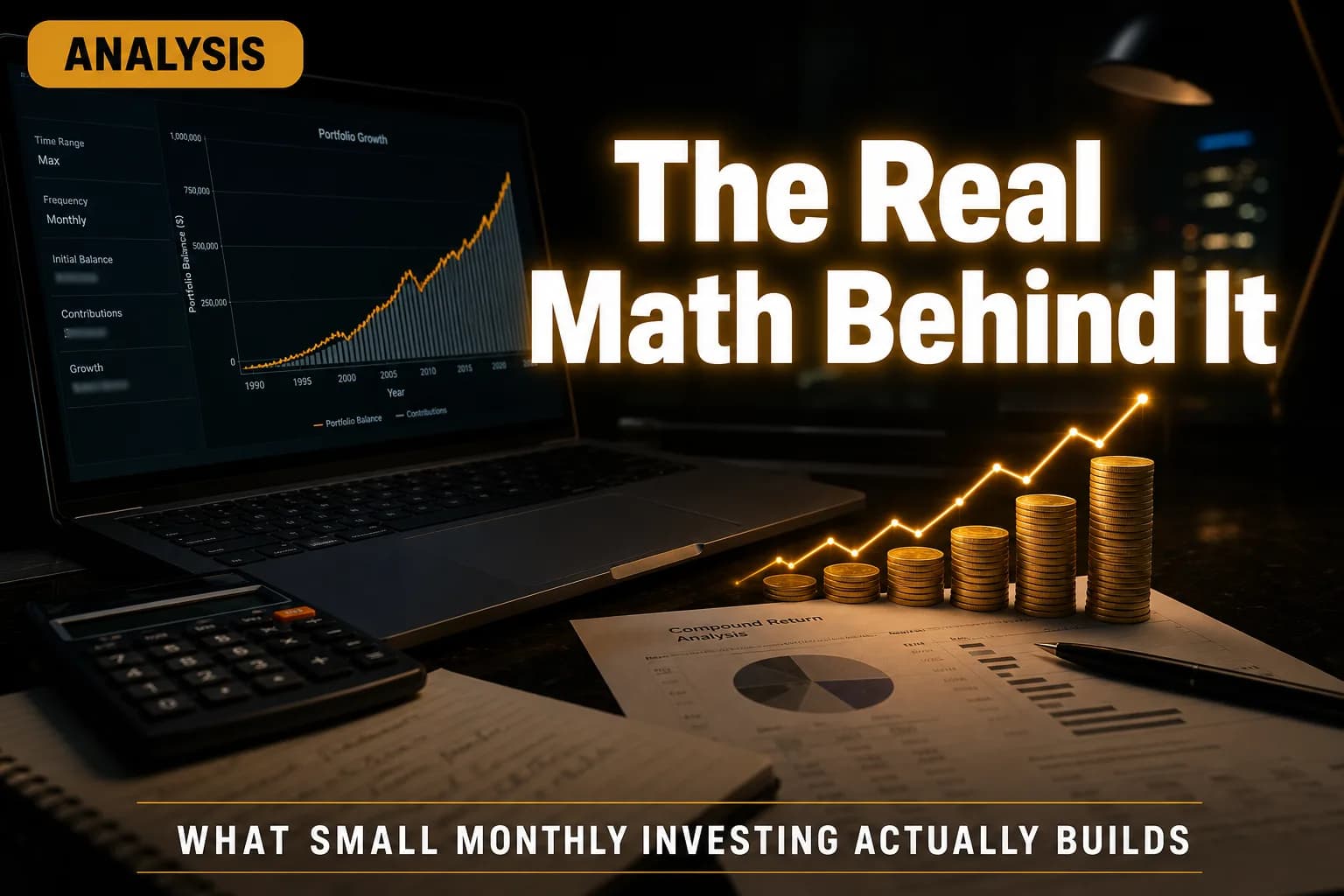
Consider the math. A $50,000 portfolio yielding 3.5% with 7% annual dividend growth produces roughly $1,750 in year-one income. Held for 15 years with dividends reinvested, that same position — assuming growth holds — can generate over $4,600 annually by year 15, without adding a single new dollar of capital. That's the actual mechanism of dividend investing: growth compounding on top of yield, not yield alone.
The Four-Point Vetting Framework
Rather than reacting to whatever stock is trending on financial news sites this week, run every candidate through these four filters before buying.
1. Dividend Yield — In Context, Not Isolation
A yield only means something relative to the sector and the company's own history. A utility stock yielding 4% is unremarkable; a tech company yielding 4% might signal distress. Compare the current yield to the stock's 5-year average yield — if it's meaningfully higher than normal, investigate why before assuming it's a bargain.
2. Payout Ratio — The Sustainability Signal
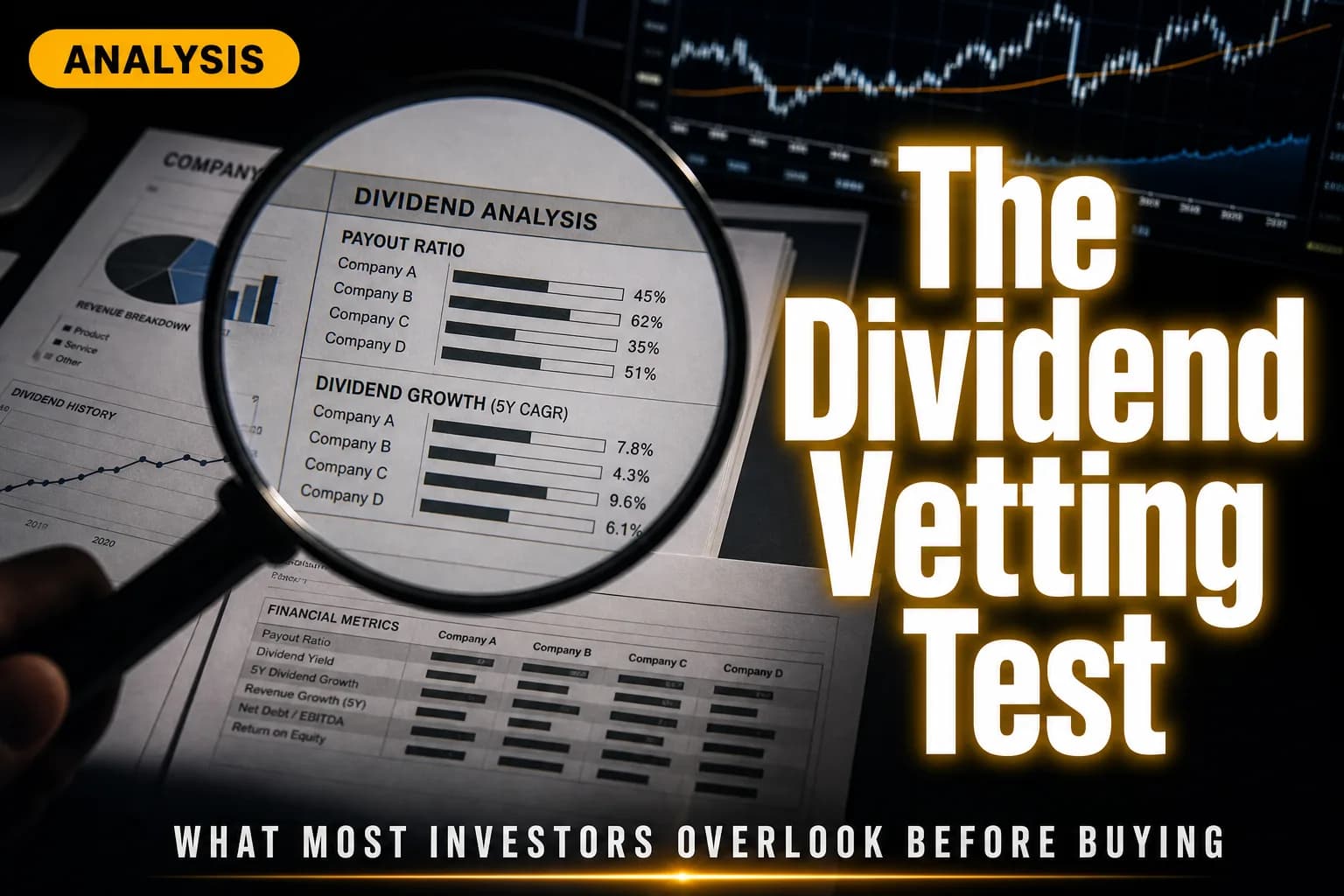
The payout ratio (dividends paid ÷ net income) tells you how much room a company has before a dividend becomes unsustainable. A ratio under 60% for most industries signals comfortable coverage; utilities and REITs often run higher because of their business models. Anything consistently above 80-90% for a non-REIT company deserves scrutiny — it means nearly all profit is going out the door, leaving no cushion for a bad quarter.

financial documents with highlighted dividend metrics.
3. Dividend Growth History — The Track Record That Matters
Companies that have raised dividends for 10, 20, or even 50+ consecutive years — the so-called Dividend Aristocrats and Dividend Kings — have survived multiple recessions, rate cycles, and market crashes while still paying shareholders more each year. This track record is a proxy for management discipline and business durability that a single year's yield number simply cannot capture. Names like Coca-Cola, Johnson & Johnson, and Procter & Gamble have raised dividends for over 50 straight years, a streak that spans multiple Fed rate cycles and at least four recessions.
4. Balance Sheet Strength — The Downside Protection
A company can have a low payout ratio and strong dividend growth history and still be vulnerable if it's carrying too much debt. Check the debt-to-EBITDA ratio (under 3x is generally healthy for most sectors) and free cash flow coverage of the dividend — free cash flow should comfortably exceed the total dividend payout, not just barely cover it.
Common Mistakes That Sink Passive Income Portfolios
The single most common error is yield chasing — buying the highest-yielding stock on a screener without asking why the yield is high. Often it's high because the stock price has crashed on bad news, mechanically inflating the yield while signaling the market expects a cut. This is precisely how "safe" income portfolios get blindsided.
A second mistake is concentration risk. Loading up on three or four high-yield stocks in the same sector — say, all energy or all REITs — means a single sector downturn (like the 2020 energy collapse or the 2022-2023 REIT selloff tied to rising rates) can crater your entire income stream at once. Diversifying across sectors — consumer staples, healthcare, utilities, industrials, and financials — smooths out sector-specific shocks.