The Trump–Iran Deal Is Reshaping Every Market Right Now — Here's Where to Put Your Money.
The geopolitical chessboard just moved — and markets are pricing it in before the ink dries. A potential U.S.–Iran peace framework is circulating: a 60-day ceasefire extension during which the Strait of Hormuz would be reopened, Iran would regain the ability to freely sell oil, and negotiations would begin on curbing its nuclear program. This is not noise. This is a structural macro shift — and it is happening now, while most retail investors are still figuring out what to Google. Axios
At Full Wealth Today, we don't react to headlines. We position ahead of the consensus. This is your analytical breakdown of the Iran deal market impact: what's moving, who wins, who loses, and where the asymmetric opportunity lies.
Why the Strait of Hormuz Is the Most Important Chokepoint in Global Finance
Most investors underestimate geography. The Strait of Hormuz — a narrow waterway between Iran and Oman — is why this conflict is a financial crisis, not just a political one. It carries approximately 20% of the world's oil supply. When it closes or comes under threat, every supply chain on earth gets more expensive. Yahoo Finance
The U.S.–Iran conflict has been ongoing since late February, with negotiations for a potential end underway since a conditional ceasefire took hold in April. Trump has called for Iran to end its nuclear program and reopen the Strait of Hormuz. The longer this stays unresolved, the more damage compounds: inflation creeps higher, central banks delay cuts, and growth assets bleed. The Washington Post
The 10-year Treasury yield climbed to 4.362%, up from 3.962% before the conflict started, as investors pared back expectations for Federal Reserve rate cuts this year. That single data point explains why tech and crypto have been under pressure for months. CNBC
What the Deal Actually Contains — And What It Doesn't
Trump has demanded Iran dismantle its Natanz, Fordow, and Isfahan nuclear sites — which the U.S. bombed after joining Israel's war against Iran last June. Iran's foreign ministry stated the two sides remain both "very far and very close" to an agreement, noting the U.S. had put forth "conflicting stances several times." CNBC
The tentative framework, per multiple U.S. officials: the deal being negotiated could open the Strait of Hormuz, end hostilities, unfreeze certain Iranian assets, and guarantee further negotiations aimed at curbing Tehran's nuclear program. Iran's key sticking points remain its insistence on keeping its enriched uranium stockpile and levying tolls for passage through the strait. CNBC
Analyst Note: A deal that merely reopens Hormuz without resolving the nuclear file is a ceasefire, not peace. The market impact will be immediate on oil — but geopolitical risk premium will remain embedded in energy prices for months.
Oil: The Asset Class at the Eye of the Storm
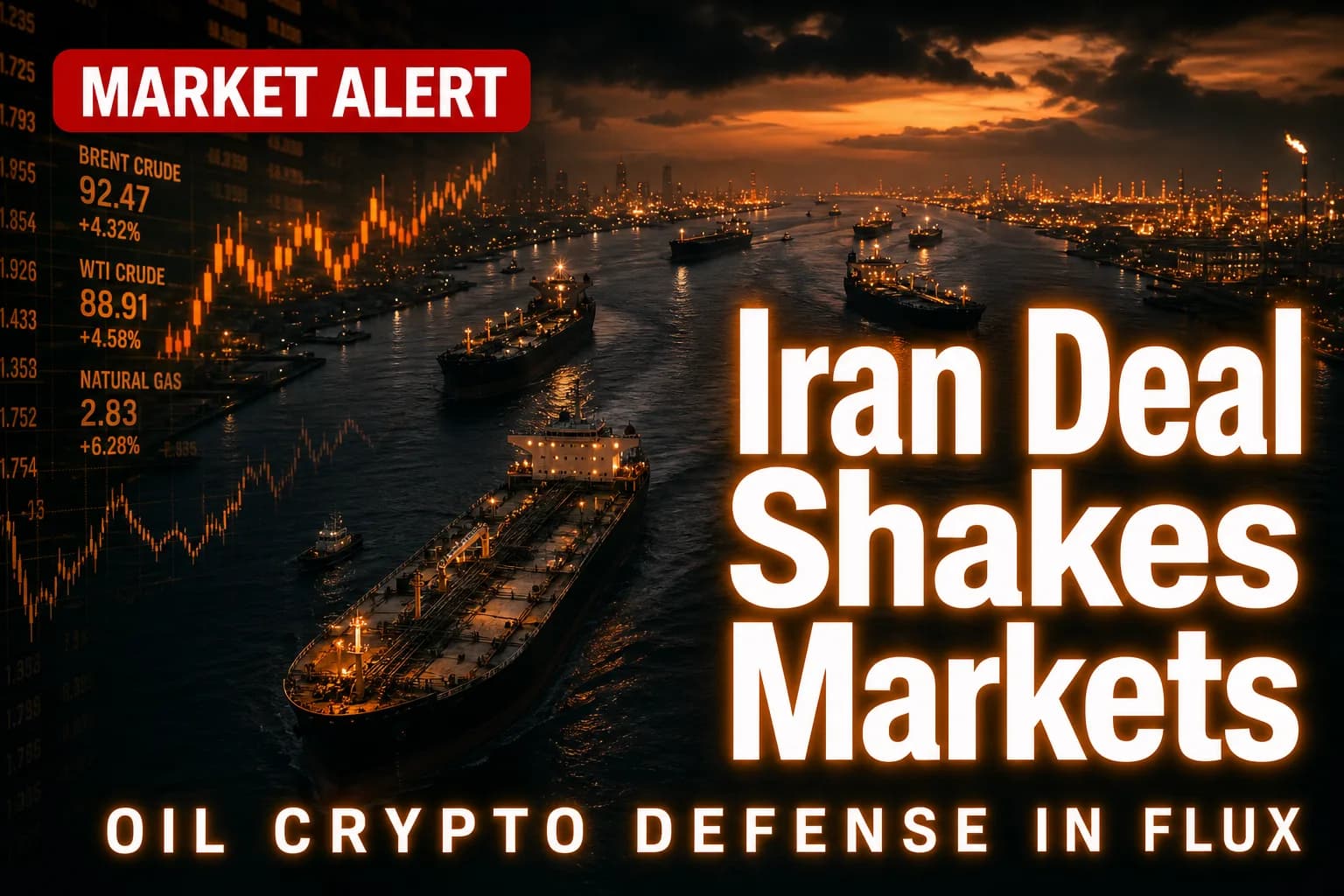
Oil is the most direct read on this deal. WTI dropped to $96 and Brent Crude fell to $103 on de-escalation hopes, though both remain around 55% higher than pre-conflict levels. That 55% premium above pre-war levels is entirely a geopolitical risk surcharge — and it will not fully unwind until Hormuz physically reopens and shipping traffic normalizes. MEXC
U.S. West Texas Intermediate futures dipped almost 5% to $91.79, while international benchmark Brent fell below the $100 mark for the first time in over a month on news of deal progress. Peace talks face a key hurdle: Iran's insistence on keeping its enriched uranium stockpile within the country. CNBC
What this means for investors:
- Short-term: Oil is volatile. Every headline can swing WTI $5–8 in hours.
- Medium-term: A confirmed deal sends Brent toward $80–85. Energy stocks give back gains.
- Long-term: Even post-deal, global energy infrastructure investment accelerates. Pipeline companies, LNG exporters, and non-Middle Eastern producers (Canadian oil sands, U.S. shale) retain a structural premium.
Energy stocks to watch: ExxonMobil (XOM), Chevron (CVX), ConocoPhillips (COP) — these benefit from elevated oil but will see profit-taking on deal confirmation. The smarter trade post-deal is oilfield services (Schlumberger/SLB, Halliburton) as reconstruction and new supply development ramps globally.
Defense: The Trade That's Already Running Out of Road
Defense giants emerged as relative winners from the Iran war, with investors flocking to the largest U.S. primes as hedges against escalating conflict and inflation risk. Lockheed Martin was among those whose shares jumped on expectations of heavier weapons usage and larger Pentagon budgets tied to the conflict. finviz
The trade worked. Now the question is exit timing. Energy and defense names like XOM, CVX, and LMT may become crowded and volatile — strong up moves can be followed by sharp pullbacks on any hint of de-escalation. Tickeron
Our read: If a deal is signed, defense stocks face a near-term correction of 8–15%. But the structural defense budget expansion is not going away. NATO allies are rearming. The U.S. Congress passed supplemental defense spending. The Iran war accelerated a decadal trend, not created it. Hold core defense positions; trim tactical overweights on any deal headline.
Crypto: The Most Volatile, Highest-Potential Angle
Bitcoin's behavior during this crisis has been textbook — and revealing. Bitcoin slipped below $76,000 and triggered liquidations exceeding $500 million across more than 120,000 traders in a single day when Iran closed its western airspace. Hours later, on deal news, it recovered. BigGo Finance