At the Federal Reserve's most recent meeting, a growing number of officials said they are no longer willing to treat elevated inflation as a temporary problem the central bank can wait out. That's the headline finding buried inside the meeting minutes, and it matters to anyone searching for inflation latest news because it directly reshapes the odds of when — or whether — interest rate cuts arrive this year.
This isn't a minor technical disagreement. The minutes describe a Federal Open Market Committee where a widening group of participants pushed back against the idea that inflation would keep drifting toward the Fed's 2% target on its own. Several officials reportedly argued that policy needs to stay restrictive for longer than markets have been pricing in. That's a direct contradiction of the rate-cut narrative that's been propping up stock valuations and mortgage refinancing hopes since late last year.
What Actually Happened Inside the Meeting
The Fed doesn't release a play-by-play, but the minutes are explicit about the shift in tone. A number of officials flagged that recent inflation readings — still running above the 2% target — represent a pattern, not a blip. Some participants went further, according to the minutes, floating the idea that if progress on inflation continued to stall, the committee might need to keep rates higher for an extended period rather than easing on the timeline investors expected entering the year.
That's a meaningful change from prior meetings, where the committee's language leaned toward "when," not "if," on cuts. The minutes show the debate has shifted from timing cuts to questioning whether the current disinflation trend is even intact. For a committee that operates by consensus-building and carefully hedged language, describing officials as having "lost patience" — the framing used in reporting on the minutes — is unusually blunt.
Who Gains and Who Loses From a Longer Pause
Savers with money in high-yield savings accounts and money market funds are the clearest winners if the Fed holds rates higher for longer. Yields above 4.5% on cash-equivalent products only exist because the federal funds rate is elevated; every month the Fed holds instead of cutting is another month those returns persist.
Borrowers lose under the same scenario. Anyone carrying variable-rate debt, shopping for a mortgage, or running a small business on a line of credit is stuck paying financing costs tied to a policy rate that isn't dropping on the schedule they'd hoped for. The National Association of Realtors has repeatedly tied stalled home sales to mortgage rates that won't come down without Fed action — a delayed cut extends that freeze.
Equity markets, particularly rate-sensitive sectors like housing, homebuilders, and small-cap stocks that rely on cheaper credit to grow, are exposed if the "higher for longer" camp inside the Fed wins the internal argument. Growth stocks priced on future earnings discounted at lower rates take a similar hit when the discount rate assumption gets pushed out.

Federal Reserve building, tense atmosphere.
The Strongest Case Against This Reading — and Why It Doesn't Fully Hold Up
The obvious counterargument: Fed minutes always contain a range of views, and citing a few hawkish voices doesn't mean the committee's actual policy path has changed. Fed communications are deliberately hedged, and reporters have an incentive to find the most dramatic quote in a document written by committee. A single meeting's minutes showing more hawkish commentary doesn't guarantee the Fed's next move is a hike, or even a prolonged hold.
That's a fair challenge, and it's worth taking seriously. But the counterargument undersells what changed structurally: the minutes show the number of officials expressing concern grew compared to prior meetings, not just the volume of any one voice. Markets don't price Fed policy off a single hawk — they price off shifts in the composition of the committee's view over time, and that composition shift is exactly what the minutes document. The Fed's own forward guidance operates on exactly this kind of incremental signal, which is why traders parse these minutes line by line instead of dismissing them.
How the Bond Market Already Reacted
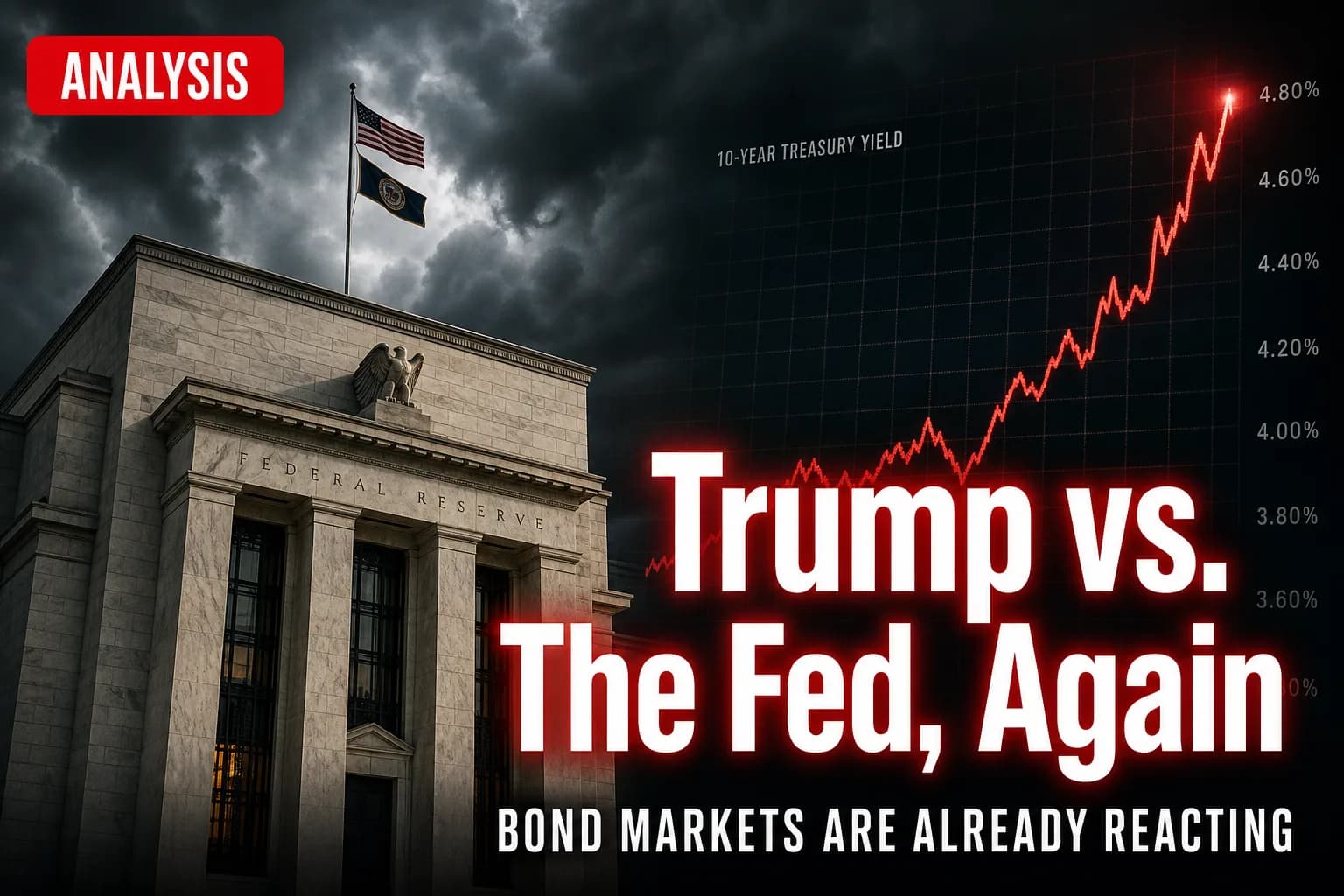
Treasury yields are the fastest tell for how seriously investors are taking this. When rate-cut expectations get pushed out, yields on shorter-duration Treasurys tend to firm up because investors demand more compensation for holding cash-equivalents while the Fed stays restrictive. Fed funds futures pricing — tracked continuously by the CME's FedWatch tool — is the cleanest real-time gauge of how many cuts the market expects and when, and it has been recalibrated multiple times this year as inflation data came in hotter than forecast.
The pattern is consistent: strong jobs reports or sticky CPI prints push expected cut timing later, and Fed communications that echo that caution reinforce the same move. This meeting's minutes function as confirmation that the committee itself shares the market's growing skepticism about how close cuts really are, rather than the Fed being ready to override cautious market pricing with dovish surprise.